
The term refixs2.5.8a has recently gained attention among users who deal with system tools, configuration-based utilities, and versioned software components. While it may look like a random string at first glance, refixs2.5.8a represents a structured release identifier that signals functionality improvements, stability refinements, and controlled updates within a technical environment. Understanding what refixs2.5.8a stands for, how it is used, and why it matters can help users make better decisions when working with modern digital systems.
What Is refixs2.5.8a?
At its core, refixs2.5.8a refers to a specific version of a modular system component. Versioned identifiers like this are commonly used to track changes, bug fixes, and feature adjustments across updates. The structure of refixs2.5.8a indicates that it is not an early build but a mature revision designed for consistent performance. Users who encounter refixs2.5.8a are typically working within environments where precision, compatibility, and reliability are critical.
Understanding the Version Structure
The naming format of refixs2.5.8a follows a logical pattern. The base name identifies the core system, while the numerical segments indicate incremental updates. In refixs2.5.8a, the “2” often reflects a major version, “5” a minor enhancement stage, “8” a maintenance-level improvement, and “a” a small patch or adjustment. This structure helps developers and users quickly understand the scope of changes included in refixs2.5.8a without reviewing long documentation.
Key Features of refixs2.5.8a
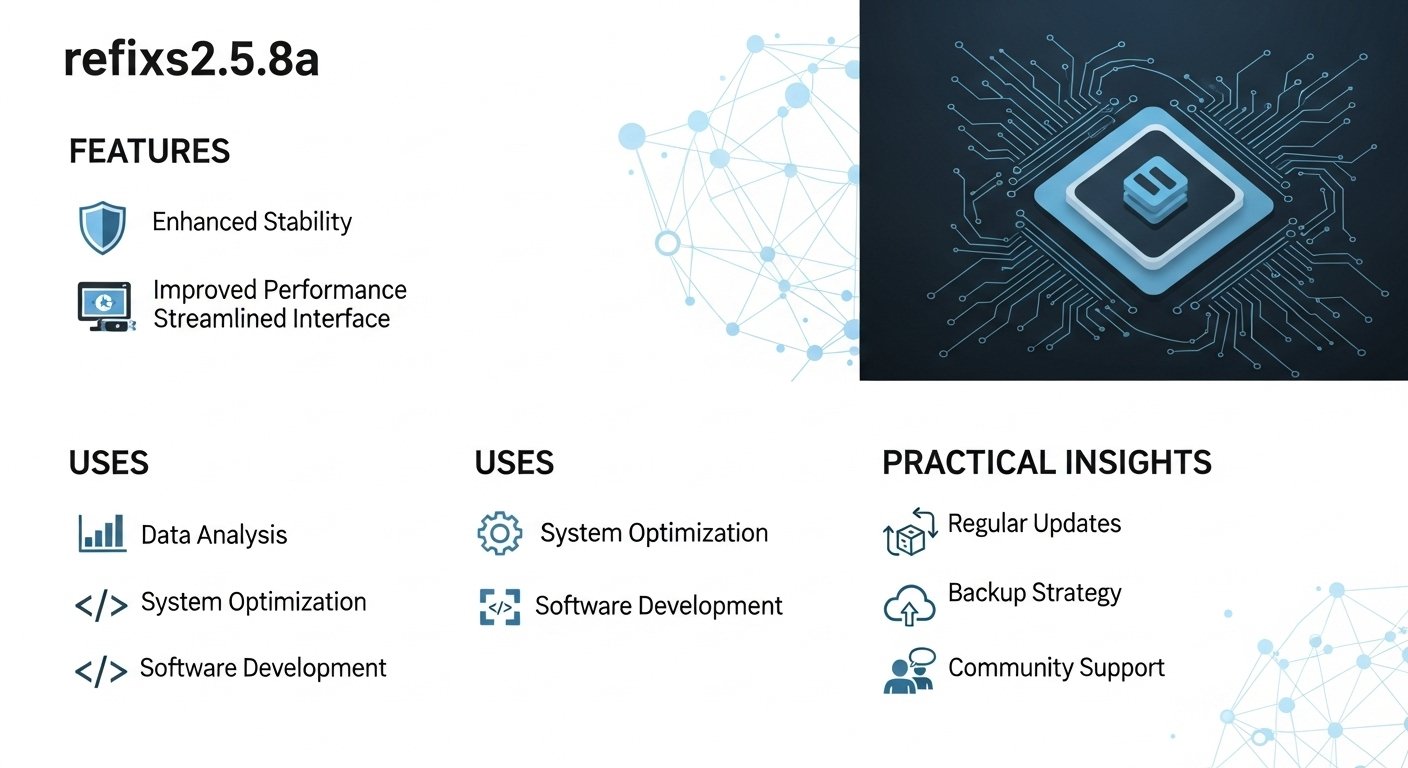
One of the strengths of refixs2.5.8a is its focus on stability. This version is designed to reduce system conflicts and improve operational consistency. Performance optimization is another highlight, as refixs2.5.8a often includes refined processes that run more efficiently than earlier builds. Security hardening is also commonly associated with refixs2.5.8a, making it suitable for environments where data integrity matters. Additionally, compatibility improvements allow refixs2.5.8a to integrate smoothly with related components.
Common Use Cases
refixs2.5.8a is typically used in controlled setups such as development environments, internal tools, or specialized platforms that rely on version accuracy. System administrators may deploy refixs2.5.8a to ensure uniform behavior across installations. Developers might prefer refixs2.5.8a because it offers predictable results during testing and deployment. In workflow automation, refixs2.5.8a can serve as a dependable base that minimizes unexpected behavior.
Benefits Over Earlier Versions
Compared to previous iterations, refixs2.5.8a delivers noticeable improvements. Reduced error rates are a major advantage, as refinements address known issues from older versions. The streamlined configuration process in refixs2.5.8a saves time during setup and maintenance. Users also report better responsiveness, which can be attributed to internal optimizations included in refixs2.5.8a. These benefits make refixs2.5.8a a preferred option for users seeking long-term stability.
Implementation Considerations
Before adopting refixs2.5.8a, users should review system requirements and existing dependencies. While refixs2.5.8a is designed for compatibility, checking alignment with current components prevents conflicts. Backup procedures are recommended prior to implementation, ensuring a safe rollback if needed. Proper testing in a staging environment allows users to confirm that refixs2.5.8a behaves as expected under real conditions.
Best Practices for Working With refixs2.5.8a
To get the most out of refixs2.5.8a, consistent monitoring is essential. Tracking performance metrics helps identify whether refixs2.5.8a is delivering the intended improvements. Documentation should be updated to reflect the use of refixs2.5.8a, making future maintenance easier. Regular audits ensure that configurations remain aligned with the capabilities of refixs2.5.8a and that no outdated settings remain active.
Conclusion
In summary, refixs2.5.8a is more than just a technical label. It represents a carefully refined version designed to improve stability, performance, and reliability. By understanding how refixs2.5.8a fits into a system’s lifecycle, users can confidently implement it and benefit from its structured enhancements. Whether used in development, administration, or automation, refixs2.5.8a offers a balanced solution that meets both technical and practical needs.